Showing posts with label Italian cuisine. Show all posts

Saturday, June 27, 2009

Italian Olive Oil an its gains

 Olive Oil
Arrive in November, proviso you obtain a coerce out keen over landscape in Tuscany otherwise the extra Central Italian regions, you would perceive people scattering parachutes roughly over the olive trees and hiking up keen on them to stripe away the mature olives with gloved hands -- additional south they in addition thump the olives movable with lengthy sticks, but then yet again the trees are a great deal bigger, too immense to create hand-stripping practical. The parachutes craft it much easier to regain the olives that fall to the ground.

So next is what? The olives are carried with difficulty off to the frantoio, or olive press, to formulate olive oil, Athena's great gift to humanity. In certainty the word "press" is rather of a misnomer -- the system is extra multifarious. To set in motion with the olives are cleanse, afterward, if the press is customary, they're ground in a stone ditch, by means of straight stone wheels that were once turned by oxen and are now mechanized.

During prehistoric days, the pulp then goes onto rush-mat disks that were piled and pressed. What came out was olive oil-and-water slurry that go hooked on a tank to divide; the initial olive oil was the greatest and habitually went to the landlord, who utilized it at table. The farmers, on the other hand, make use of some of their olive oil at table, and the relax around the farm, to stay lamps lit and whatnot.

The chief evils with the traditional pressing technique is its slothfulness: Olive oil is tremendously unpreserved, and by the time it draw to a close unscrambling in a conventional tank it has also begun to oxidize (this is why the landlord skimmed away the first olive oil, and why the farmers used much of their olive oil in lamps rather than as a condiment).

In order to easolve this problem, most up-to-the-minute presses use centrifuges to divide the olive oil from the water, and cut off the olive oil from the air as much as probable. There have also been move ahead in milling, and countless presses now have permanent feed mechanical crushers. But it's still a amazing pleasure to see a established stone wheel press rumble its way through the olive paste.

One particularly key thing about this sum total formulas that it’s conducted at room temperature. The olives are not at all heated, nor are the paste, and the paste is simply compressed No chemical treatments of any kind. or else the olive oil won't be virgin or extra virgin olive oil, the two best grades. Non-virgin olive oil is either too acidic to be virgin, or is pressed from pulp that has been procedure one way or another, and there is a insignificant differentiation in flavor.

Italians generally cook with virgin olive oil, and use extravirgin olive oil raw, in salads, drizzled into hearty soups, atop bruschetta, and wherever else the flavor of the oil complements the dish.

Non-virgin olive oils are acceptable for cooking, but you won't want to use one to dress your salad.

Thursday, June 11, 2009

Proper Italian diet.

The eternal Italian loveliness is an enormous advocate in the rule of pasta. "Everything, Straightforward Mediterranean diet is healthy and will help you lose weight. Just look at the portions and don't surplus your pasta with thick, rich, creamy sauces.Begin through uncomplicated new foods and you can't go wrong. Stock your fridge and pantry with good quality pasta, olive oil, tomatoes, onions, garlic, lean meat, fish and sea food and herbs like oregano, basil and parsley. One can add a little parmesan cheese as well, but stay away from recipes that demand a cup of cream or large amounts of grated mozzarella.

Effortless and fulfilling pasta meal, start by boiling up a portion of pasta in a big saucepan of water. The more water around your pasta the better, because them it won't stick. You can choose penne, macaroni, shells or linguine instead of plain old spaghetti. Cook the pasta until it is just soft but still has firmness - the Italians call it al dente or `to the tooth'.Then chop up a clove of garlic, an onion and a couple of tomatoes. Heat up a tablespoon of good olive oil, saute' the garlic and onions until soft, and add the tomatoes. Cook until the ingredients are well blended together. Finally add some herbs of your choice - maybe some oregano and basil, or parsley and marjoram. Experiment until you find a combination you love. That's all you need to do for a basic pasta sauce. Served over you hot pasta, this will be delicious. Don't have any bread - the pasta will provide all the carbs you need. You can sprinkle a little parmesan over the top. Enjoy!

While making main meal, add some meat or seafood. If by means of beef or chicken, make sure it is very lean. Cut away all the fat. You can steam or bake chicken so that the fat runs off, but be sure to remove the skin as well. Chop up the chicken or cut the breast meat into slices and add it to your basic pasta dish. Do the same with steak or chops - trim away the fat, cook, and serve it with your pasta, chopped or sliced.Fish and seafood such as clams, prawns and crab can be steam and served with your pasta in the same way. You don't need to cook it up in heavy sauces. Give your taste buds a treat with simplicity and fresh taste.Pasta soups are nourishing and satisfying on a cold day, and are simply made with lean meat, stock and vegetables. Add the pasta of your choice, or use rice pasta, small grains of pasta that made a hearty soup.Pasta salads are refreshing and delicious in hot weather. Cook your pasta, let it cool, and mix with a variety of chopped salad vegetables - greens, tomatoes, grated carrot, chopped capsicum or steamed cooled broccoli or cauliflower. Dress with a simple olive oil and vinegar salad dressing or stir through the flesh of half an avocado. Delicious!

Larger pasta varieties like cannelloni and lasagna can also make delicious, but simple meals. Fill your cannelloni with chopped mushrooms and low fat ricotta cheese, and pour over a sauce made with garlic, onions, tomatoes and a cupful of chicken stock. The stock helps to soften the pasta as it bakes in the oven.Simplify lasagna by layering the sheets of pasta with a basic tomato, garlic and onion pasta sauce, and mashed pumpkin for vegetarian lasagna that is good enough to serve to dinner guests.Eat like a gourmet and look good too. Just look at Sophia!

Thursday, June 4, 2009

Gnocco

Gnocco
Gnocco

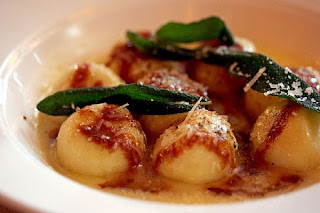
Expression gnocco in Italian means “a stupid person.” These induce some food writers to announce that gnocchi, the dish, is responsible for the association. But gnocchi are anything but a stupid dish. Consequently these days all gnocchi made of flour and water are measured “pasta” while all dumplings made of special ingredients are called gnocchi. Gnocchi can be made with the most diverse ingredients, such as squash, bread, and semolina flour; and they can be flavored amalgamating the dough with spinach, saffron, and even truffles. They are boiled in water or broth and like pasta they can be dressed with many sauces such as pesto, tomato, butter and cheese.

Further predictable type of gnocchi includes the Roman recipe for “semolina gnocchi” topped with cheese and baked and the “gnocchi gaudy” (naked gnocchi” from Tuscany made of ricotta cheese and spinach.

Nowadays gnocchi are principally made with potatoes, which have become conventional in Italy. In spite of the long description, gnocchi are very easy to prepare. They can be claded with many sauces, but are especially good with pesto, Americana sauce, Ragu', four cheeses, butter and fresh tomato sauce, or very simply butter and sage as in our arrangement. The taste of the butter - sage dressing is very delicate and will enhance the taste of the potato dumplings. They are also one of the most refined dishes, worthy of the most complicated menus.

Small dumplings are one of the oldest preparations in the history of food, recorded as far back as cookbooks of the thirteenth century. In a fragment of a book of the 1300s there is a recipe for gnocchi written in the Tuscan dialectal language (1).
“If you want gnocchi” reads the recipe, “take some cheese and mash it, then take some flour and mix with egg yolks like if you make dough. Place on the fire a pot of water and when starts boiling place the mixture on a board and slide them in the pot with a spoon. And when they are cooked place them on the plates and top them with a lot of grated cheese.”

Gnocchi gnudi
Gnocchi gnudi
(naked gnocchi) from Tuscany made of ricotta cheese and spinach

Tin order to make potato gnocchi and achieve the best results, it is important to choose the right type of potato. The potato needs to be floury, with minimum water content. The best are old Russet potatoes, low in water and high in starch. Round (white or red) or Yukon potatoes would be too waxy, which would make the gnocchi either too heavy or too gummy, or would cause them to break apart in the boiling water. The addition of egg to the dough, not always necessary, serves the purpose of holding the preparation together better. The choice of the right potato potentially makes the use of the eggs optional.

Potatoes can be baked in the oven, but more often are boiled. In this case do not peel them but boil them with the skin on. This will avoid absorption of excess water. For the same reason, don’t break or pierce them. Too much water will cause the preparation to absorb too much flour and make the gnocchi too heavy. Potatoes for gnocchi can also be baked or cooked in the microwave.

Opt for potatoes free of green spots, sprouts, and “eyes”. Remove them from the potatoes if they are present because they can be toxic. Peel the potatoes while they are still hot. Don’t add egg if you are confident of the result: the dough will be softer. Don’t overdo the dough and don’t add too much flour.

Gnocchi will not keep for long after they are prepared and they must be cooked soon. They can be kept covered on a floured cloth for few hours. Soon after they may start releasing their moisture content and become gummy and sticky. Placing them in the refrigerator will not help since the humidity present there may cause additional damage.

Gnocchi instead can be easily frozen. Drop frozen gnocchi directly in the boiling water without defrosting: they will be ready when they surface like indicated in the recipe


Reblog this post [with Zemanta]

Saturday, May 23, 2009

Italian food fundamentals

Authentic Italian food, as defined, is very general in inspiration and based on fresh ingredients of the pristine quality standards. It can be said that this is food without pretense, even when it gets served in trattorias or restaurants. This cuisine takes you into the kitchens of Italian culture and its regions such as Lombardy, Piedmont and Tuscany to sample pasta, pizza, antipasti and risotto made the authentic way - fish and shellfish redolent from the fresh water, hearty treatments of meat and game and irresistible gelato.

Italian kitchen secrets


Secrets to Euro-Italian Recipes

Desserts & Dough's

If one is has fumbled around through the sites seeking Italian recipes, or asked someone as in how to prepare an Italian dessert, or even bought an Italian cookbook with enough recipes to last you for a lifetime or perhaps more.

But have you ever given a thought silently... as to what are the fundamentals or basic necessities of these recipes?

Have you ever wondered what makes them authentically Italian, what is it that they have in common, or what is the basic guideline or steps you require knowing in order to stay within the original method of the Italian-style of cooking.

Tiramisu cake

Have you ever been confused between Americanized Italian recipes to that of real Italian recipes? Here are some of the basic guidelines and ideas as to what constitutes European - Italian recipes. You may give a thought about Italians as the pastry kings of the world – but the picture is some what different because they are not even big on sugary foods. if one thinks that adding basil to any dish that it suddenly turns Italian, and this is just not so.
There is a selection of ingredients favoured in Italian dessert making:


Spices - The most common spice ingredients found in desserts are; cinnamon, and vanilla.

Liquors –
You will usually find that many call for some kind of liquor or wine such as; rum, Marsala, Maraschino, red or white wines and sometimes Cognac or other liquors. Types such as these are used most often in fruit dessert recipes, sometimes in cookies.
Coupled with apricots you will find; rum - with apples; rum or white wine - and with pears; maraschino.

Marmalades, Raisins & Nuts –
Marmalades are widely used for cookies and "Crostata" pie-sized tarts. And many other desserts Italians make are baked using nuts; pinoli, hazelnuts, almonds or sometimes pistacchi. Raisins are used in cakes, many times coupled with rum.

Cheeses –
Soft mild cheeses are repeatedly used in making cakes and pastries. Mascarpo
ne is one more commonly known, and is used often in the making of "tiramisu" a delicious and typical Italian dessert made with savoiarda cookies soaked in espresso and layered with an egg cream. The well-known ricotta cheese is used in crafting cannoli; the Sicilian tube cookie filled with sweetened ricotta tossed with flakes of chocolate and candied fruit. Certosino is another soft cheese that is used by the Bolognese to make a cake along with; cocoa, cinnamon, pinoli and almonds. This cake is a speciality of Bologna and made during Christmas and New Year's.

If Italians had the world's biggest sweet tooth, they would certainly be adding more sugars to their dessert recipes.

Dough's

The Italians use several different dough bases, this depending on the particular dessert. Here are some examples:

Pasta Frolla: This is used more often to make Crostate or pastries, and gnocchi

Babà Dough: This one takes allot of energy, is fantastic and light, and contains similar ingredients as the others. But the secret to this dough is in uniting the sugar perfectly with the egg, and by adding the flours very quickly thereafter.

Pan di Spagna: Used for layer cakes and in certain puddings

Brioche Dough: This dough is simple to make, but requires care and patience in the rising stage

Savoiarda: This dough is used to make savoiardi cookies (used in making tiramisù)

Sfogiata: This one is the most difficult. You might as well say it's the fundamental dough of the dessert arts. With this dough base they make a dessert called "Millefoglie," which is a light pastry that is covered with traces of pastry cream and dribbled with chocolate.


Don't forget that Italian desserts are accompanied by homemade grappas, lemoncello, sweet dessert wines or delightful liquors. This is always expected and really adds a wonderful accent to the end of a lovely meal.

Pasta Sauces & Preparations

They make as the rules of thumb when it comes to choosing to prepare a basic Italian dish. If you happen to be a wizard in the kitchen and can design something incredible yourself, by all means do so. But we seem to have to apply to some strict rules - on the count that many pasta sauces have been distorted and badly jumbled.

Pasta's Not Topped with Cheese

Believe it or not just because you are eating what is known as "pasta", does not necessarily mean that you may smother it in pecorino or Parmigiano.


Too Much Garlic & Onion: Just how much is too much?

Another intresting fact is that the Italians do not use 4 or more cloves of garlic in their recipes. Most recipes have been tampered with through the years, as to cater to different cultures with different tastes outside of Italy.

Garlic is used in fish & seafood preparations (1-2 cloves).

Recipes which contain mushrooms as an ingredient usually have garlic added to them. Wild game and pasta sauces made with duck, often call for both onion and garlic. Onion is added to pasta Carbonara, and also too many red sauces. Most often onion is used in sauces which also call for celery and carrots...

There are plenty of sauces that do not have neither onion nor garlic - like some crème sauces, lasagne, cannelloni (on occasion they use onion) and pasta's with a base of cheeses and those with butter. There are Bolognese sauces that do not call for garlic.

Garlic with these:

Almost all Seafood's, Mushroom pasta's, some wild game, pesto sauces. In seafood praparations based pasta's white wine is used, and in meat sauces red wine is added.

Onion with these:

Roasted meats like Ragù's, sauces with egg, red sauces. There are a lot of recipes in the Euro-Italian kitchen which add egg to their pasta's.

Here are some examples:

Tagliatelle in Egg Salsa

Boil Tagliatelle pasta al dente, then add it into a pan of melted butter- mix over low heat, and then add a mixture of: 3 eggs, anchovy and diced mozzarella. When the mozzarella begins to melt and the eggs begin to form a cream, add the pasta-mix and quickly serve.

Spaghetti alla Carbonara (Roman)

600g spaghetti, 3 whole eggs, 200g pancetta bacon (diced), 30g butter, 50g grated parmigiano, 1 onion (diced), 1 stalk of parsley, dry white wine (1\2 cup) and black pepper

Brown onion and bacon in butter. When brown add in the white wine and let evaporate slowly.

Beat eggs and add in: parsley, Parmigiano, and pepper. Boil spaghetti al dente. When done mix with egg mixture, mix well and serve.

Pasta Sauces made with Nuts is common in Italian cooking.


Egg Fettuccine with Nuts

700g fettuccine pasta, walnuts or hazelnuts (in big pieces), powdered sugar, cinnamon, dash of bread crumbs

Mix all ingredients together

It seems that a good combination with veal is of sage and garlic. Baby lamb is prepared with rosemary, sage and garlic when grilled. Veal can be prepared with onion or garlic, but the "Agnello" or lamb seems to favor garlic in the Italian recipes- unless being prepared with celery and carrots.

These rules of thumb are for several Italian recipes, and seem to be the ones most followed, but there are of course exceptions.

Vegetables in the Italian Kitchen

Italians were not the ones to invent boiled vegetables tossed in a bowl of butter. They blanched some tough type vegetables for 3-5 minutes then simply added them into the "Italian pan", one that was formally prepared with a garlic clove or two and some olive oil. Many, if not all, vegetables are prepared in this manner by Italians- though not all need to be blanched first. Some vegetables are cooked in oil with salt and pepper and simply sprayed with fresh lemon juice.

The Italians are also great in the flower preparation - they use; zucchini flowers that are not so opened, egg wash, flour and oil. You just have to cut off most of the stems, and the filament, cover in the egg wash and flour and deep fry them. The way they make them in Rome is fantastic! Somehow they mix in mozzarella and anchovy, they are scrumptious.

Reblog this post [with Zemanta]

Thursday, May 21, 2009

Italian Menus for Various Ocassions

In Italy meals can usually stretch up to 3-4 courses. Meals are considered as a great opportunity for spending time with family members and friends rather being under immediate sustenance, as such the daily meals can be longer than in other cultures. During holidays, Italians love to throw family feasts which would last for hours.


On daily terms, the Italians like to keep their meal up to 1-2 courses i.e.

1) First course,
2) Second course,
3) Side dish and the Coffee.

Whereas in many homes in Italy the traditional Italian menu is kept for special events (such as weddings). One observed aspect of an Italian meal, is that the first course or “Primo”, is usually the more filling dish consisting either risotto or pasta, both of them are rich in carbohydrates.
In Modern times, Italian cuisine has been expanded and now it also includes single courses (all-in-one courses), which not only provides carbohydrates but also a source of proteins at the same time (e.g. pasta and legumes).

Authentic or traditional menu {for special occassions}


Aperitivo :- Apéritifs are usually enjoyed as appetizers, before a large meal, they include Campari,Canzone and Vermout,Prosecco, Aperol, Spritz h.

Antipasto: - it is taken before meal, they can be any hot or cold appetizers.

Primo :- First course, it usually consists of a hot dish like pasta, risotto, gnocchi, polenta or soup.

Secondo :- Second course, the main dish served in the second course is usually a fish or meat dish..
Traditionally veal, pork, and chicken are the most commonly used meat, at least in the North, though beef has become more popular since World War II and wild game is very popular, particularly in Tuscany. Fish are those which are caught locally.And for drink, you can serve chocolate peanut shake

Contorno: - “Side dish", may consist of a salad or cooked vegetables. A traditional menu features sala along with the main course.

Formaggio e frutta :- "Cheese and fruits", the first dessert. Local Cheeses may also be part of theAntipasto or Contorno as well.

Dolce :- "Dessert", such as cakes and cookies.Chocolate Cupcakes are very easy to make and kids prefer to eat it.

Caffè :- Coffee

Digestivo :- "Digestives", liquors/liqueurs (grappa, amaro, limoncello,sambuca,nocino) sometimes referred to as ammazzacaffè ("coffee killer")

Reblog this post [with Zemanta]