Friday, July 10, 2009

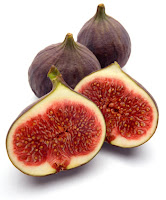
Straight from the heart of Italy- Fresh Figs

Figs
It has been a history since Italians have been consuming figs for a incredibly long time -- figs, in concert with cheese, bread, and olives, were amongst the fastener foods of the Roman Legions -- and numerous of the émigré who came to the Americas from the South, wherever they grow exceedingly well, sowed fig trees where they matured, yielding the bounty in the summer and covering the trees in the winter if it got cold. Certainly, for loads of a garden wasn't quite a garden except it had a fig tree.

Currently, most of us have to make do with what we can find in the markets. Opting out for fresh figs are painless, although one caveat does apply: They should come from where it's hot. South Italy is conspicuously hotter than Tuscany in the summer, and the figs Elisabetta and I harvested from the trees external the house we rented in Santa Maria di Leuca (on the very heel of the boot) were more affluent and more succulent than everything we have ever had in Tuscany. Inveterating to selecting, figs range from pale green though deeper blackish burgundy red, and should appear firm, with a rather voluptuous turgid roundness to them. There should be no whitish sap up-and-coming from the stems, though a drop or two of nectar from the gloominess at the bottom of the fig is OK, and trivial splits in the skin (not too deep) are also adequate. If they're overripe they become very sugary, but can also begin to ferment; some people like this amalgamation of flavors while others do not.

For the reason that they mess up quite effortlessly you should sketch on using your figs the day you buy them. Though allocating them at the end of the meal perceptibly comes to mind -- they are, after all, fruit -- they also go very agreeably with sparsely sliced prosciutto as an antipasto; I have observed a French way that involves wrapping the figs in prosciutto and grilling them, but Italians purely serve the cut figs with the prosciutto, much the way they serve melons with prosciutto. If the figs are good and the prosciutto their alike, the blend is perfect as it is.

Tuesday, July 7, 2009

Food preparation and rationing Pasta

Pasta
Stimulation foundation can be strained from this feature from Italy, the reality about Pasta, an piece of writing Nancy Harmon Jenkins wrote for the New York Times a at the same time as back, and a strand on the rec.food.cooking newsgroup in which people said that they preferred their pasta be served with a spoonful of sauce on the top and more on the side so they could add it if they wanted to. When one lives in a country one tends to assume that the national dishes are served the same way beyond the national borders -- this is not necessarily the case when it comes to pasta.

Chief disparity stuck between pasta as it is served in Italy and pasta as it is served elsewhere is that for an Italian pasta is generally a first course, to be followed by a second course of some kind, be it meat, fish, vegetable, or even pizza (many elegant Italian pizzerie offer huge selections of pasta dishes for their guests to start off with). In other words, it is a part of a meal -- important, yes, but certainly not dominant.

Segment size replicate this: One generally figures a bit less than a quarter pound of uncooked dry pasta per person (i.e. 70-80 grams), which translates into a pleasantly full deep-dish plateful. A mound is too much, because it will leave no space for the rest of the meal.

Saucing is also quite important: Moderation is again the key. One to two tablespoons of a liquid sauce such as aglio e olio, and at the most a quarter cup of a thicker sauce such as sugo alla bolognese per person, stirred into the pasta in the serving bowl so as to thoroughly coat the pasta. The pasta should not be swimming in the sauce, nor should it be bone dry: The one complements the other. Grated cheese? Depends upon the sauce; tomato sauce and meat-based sauces generally call for it and cream sauces sometimes profit from it, whereas it can be distracting in vegetable or fish-based sauces. In any case, it is served at the table, and most people opt for one or two teaspoons, not a heavy dusting that overwhelms everything else.

We now come to a thorny issue: What kind of pasta? Though Italian cookbooks, like their English language counterparts, give detailed instructions for home-made pasta, few people here have the time to make it at home except on special occasions. Day-in-and-day-out it's commercially prepared dry pasta out of a box. Nor is this a fallback; properly cooked good quality commercially prepared pasta is just as good if not better than what most people can make at home.

Difference lies in the flour: Commercial producers use semolina, which produces a pasta that will bear up well to cooking, maintaining its pleasant al dente texture on the way to the table. Unfortunately, as a friend of mine who owned a pasta factory observes, preparing dough from semolina requires industrial mixers or several hours of kneading -- more than enough to burn out the motor of a home pasta machine. Because of this home cooks resort to soft wheat flour (grade 00, which has slightly less gluten than American cake flour). The results can be superb but require extreme care in the cooking because the pasta overcooks easily

Saturday, July 4, 2009

Walnuts: Fruits of Fall

Walnuts
This popular variety of dry fruit “Walnuts” are supposed to have instigated at someplace to the east -- perchance China or India, lots of millions of years ago (remnant structure has been found in Miocene sediments) -- although they have long subsisted accepted in Europe as well

They were liked to the maximum scale by the Romans, more than ever at the closing stages of the meal, and they have for eternity played an imperative position in desserts, moreover as toppings (chopped up or whole) or as key ingredients. They moreover arise in spicy dishes, nonetheless less often, and until the prepared accessibility of olive oil (after WW II) the
Piemontese measured walnut oil to be the finest oil for dressing salads.

Procurement and Stockpiling of walnuts

Walnuts nurture in loads of parts of Italy. The greatest are from Sorrento; they're rather shady than the California walnuts one in addition finds in Italian markets, and have a to some extent sharper, more walnutty flavor.

They are traded mutually shelled and unshelled. Shelled nuts are moderately helpful if you need the nutmeats for a recipe; should you buy more than you need store the remainder tightly sealed in the freezer, because the oils in the nutmeats rapidly become rancid when exposed to room-temperature air.

Unshelled walnuts will remain longer at room temperature, although they as well will worsen with time, so you are better off buying smaller amounts as you require them rather than a big bag on sale. Should you buy unshelled nuts for a recipe, outline that a pound of nuts will yield a half-pound of nutmeats.

Final fad:
Walnut meats comprise of a nutty brown skin that is somewhat bitter, and you will likely want to eradicate it before using the nuts in recipes. To do so you will have to blanch the nuts; pour boiling water over the nutmeats with their skins, let the nutmeats soak for a few seconds, and then drain them and rub them with a cloth to remove the skins.

Tuesday, June 30, 2009

Cinghiale: Wild Boar

It might sound a bit tricky to imagine that Italian fare without accepted wisdom of pork, and although the deliberation of prosciutto or salami possibly will summon up descriptions of one of the country's numerous heirloom strains, for instance the Cinta Senese or the Nero Romagnolo, there's a different side to the picture so as to community not often imagine of: Wild boar. And it's a side that is fetching new imperative with time.

Despite of the actuality that boar populations be alive kept in test in the earlier period farmers were nippy to seize a gun, equally to look after their collect and to attain fresh meat -- the leaving of the landscape (marginal lands, in particular) on the ingredient of farming families in the 1950s successfully unconcerned this confirm, tolerate the boar to reside in new areas. At the same time, Italian seeker, who sought to reinforce the confined stock, initiate Eastern European boar that are quite a bit larger, and also much more forceful, manufacture litters of up to 15 piglets (as opposed to the 4-6 of an Italian sow).

The product has been a adversity for crop growing, with herds of boar searching the countryside much the way deer do in a few parts of North America. A winemaker said his vineyard appeared like it had been chosen with a mechanical harvester after they came calling, and I can say from own practice that they show petite fear of humans: we repeatedly see them on the other side of the hurdle untying our yard from the woods. And yes, they do come up to the fence and look in. Makes the dog (and us) nervous.

This condition it must get nearer as no surprise that hunting clubs sort out boar hunts during neither the fall, nor that boar is readily available in Italian supermarkets. From a culinary standpoint there are 4 kinds of boar.

Saturday, June 27, 2009

Italian Olive Oil an its gains

 Olive Oil
Arrive in November, proviso you obtain a coerce out keen over landscape in Tuscany otherwise the extra Central Italian regions, you would perceive people scattering parachutes roughly over the olive trees and hiking up keen on them to stripe away the mature olives with gloved hands -- additional south they in addition thump the olives movable with lengthy sticks, but then yet again the trees are a great deal bigger, too immense to create hand-stripping practical. The parachutes craft it much easier to regain the olives that fall to the ground.

So next is what? The olives are carried with difficulty off to the frantoio, or olive press, to formulate olive oil, Athena's great gift to humanity. In certainty the word "press" is rather of a misnomer -- the system is extra multifarious. To set in motion with the olives are cleanse, afterward, if the press is customary, they're ground in a stone ditch, by means of straight stone wheels that were once turned by oxen and are now mechanized.

During prehistoric days, the pulp then goes onto rush-mat disks that were piled and pressed. What came out was olive oil-and-water slurry that go hooked on a tank to divide; the initial olive oil was the greatest and habitually went to the landlord, who utilized it at table. The farmers, on the other hand, make use of some of their olive oil at table, and the relax around the farm, to stay lamps lit and whatnot.

The chief evils with the traditional pressing technique is its slothfulness: Olive oil is tremendously unpreserved, and by the time it draw to a close unscrambling in a conventional tank it has also begun to oxidize (this is why the landlord skimmed away the first olive oil, and why the farmers used much of their olive oil in lamps rather than as a condiment).

In order to easolve this problem, most up-to-the-minute presses use centrifuges to divide the olive oil from the water, and cut off the olive oil from the air as much as probable. There have also been move ahead in milling, and countless presses now have permanent feed mechanical crushers. But it's still a amazing pleasure to see a established stone wheel press rumble its way through the olive paste.

One particularly key thing about this sum total formulas that it’s conducted at room temperature. The olives are not at all heated, nor are the paste, and the paste is simply compressed No chemical treatments of any kind. or else the olive oil won't be virgin or extra virgin olive oil, the two best grades. Non-virgin olive oil is either too acidic to be virgin, or is pressed from pulp that has been procedure one way or another, and there is a insignificant differentiation in flavor.

Italians generally cook with virgin olive oil, and use extravirgin olive oil raw, in salads, drizzled into hearty soups, atop bruschetta, and wherever else the flavor of the oil complements the dish.

Non-virgin olive oils are acceptable for cooking, but you won't want to use one to dress your salad.

Thursday, June 25, 2009

Lamb from Italy

Bigger sectors of Italy, individually in the rocky north and the moorland of the south and the isles, are a lot enhanced suitable to sheep and goats when compared to cattle, and it consequently approaches as no disclosure that Italians have been nurturing flocks from a long period of time, or certainly that the flocks ruled lives of the common , amid the men parting their folks in late spring to take their animals to nibble the comfortable mountain pasture, and recurring dwellings in the fall loaded with cheeses and wool.

The lamb is beamy colored, especially tender, and dexterously flavored, whilst there isn't a great deal in the means of fat. Cause of its delicacy abbacchio is most excellent cooked just, and bearing mild seasonings. Grown-up lambs are weaned, and can be up to a year old. Amid admiration to abbacchio they are superior and their meat is dim.

While choosing lamb favor animals with moderately wide backs that have fairly a bit of meat on them, be sure that the fleshy tissues of the thighs are firm and not soft, and ensure they have plentiful, hard, white-to-pale-pink kidney fat. An imperative obsession to make a note of is that of bigger cuts of lamb which are enclosed by a flimsy white casing called the fell, which you must eliminate and if the slaughter hasn't previously when you acquire the meat.

But also that it keeps seasonings and even heat from penetrating the meat. To do away with the fell from a piece of lamb, locate a place where the coating of fell and fat will come free, revealing the meat, if you trip a knife beneath it (for example, the wide end of a leg), and drag the fell up at this point, wounding it away with the blade and being cautious to stay the blade to the side of the cut down rather than the meat, lest you score the meat. When you have removed the fell you can trim away more fat if you want, though you should keep in mind that a little fat will help keep the meat moist as it cooks.

A final observation:

Though abbacchio lamb is only one of its kind, kid and older lamb are identical, and the procedure that call for one will work likewise well with the other.

Saturday, June 20, 2009

Furthermost offerings of natural world - Porcini

A loaded, fleshy mushroom is what Porcini stands for. Each year while September draws closer, the value of mushrooms tends to slip down.

Even though the systems necessitates a licence and legalize the quantity of bags and places where choosing is allowable, mushroom stalking persists to be a breathtaking way to expend a day in the woods. It's quite trouble-free all you necessitate are a pair of good quality shoes, a storage bin, and a stiletto. The recompense can be porcini: a mushroom that is incredibly resourceful, flimsy enough to add elegance to a graceful dish, and up till then has an enormous sturdy essence.

What one bear in their minds is that not at all scoff untamed mushrooms except an connoisseur has acknowledged them. Noxious mushrooms may look a lot like other enviable species, and some of them, such as Amanita muscaria, contain a deadly neurotoxin.

Porcini are extremely valued and esteemed mushrooms. They have a even, fleshy texture and a burly woodsy flavor.
It can weigh up from an ounce to more than a pound, and their caps can range from one to twelve inches in diameter. You will infrequently hit upon them unsullied in the United States, but you may seek coming across for them in departmental make markets in late spring or in the fall. Some grocery provision stores sooner or later bear traded in frozen Porcini. The dried up variety of this mushroom is readily obtainable, nevertheless. Porcini mushrooms also arrive conserved in oil.

Exposure to air or drying is a old manner of safeguarding feral mushrooms to benefit from them year-round. Dehydrated mushrooms will remain for months exclusive of refrigeration.

Decide mushrooms that are a tan to pale brown in color; shun those that are flaky. Dried up porcini have got to be make softer in boiling water for at slightest 20 minutes before by means of.
As a rule of thumb, one ounce of dried mushrooms will reconstitute to six to eight ounces. Once softened, the mushrooms may be wedged, hacked, or left whole, as per the recipe.

Then reconstituted mushrooms must be added by the side of commencement of cooking. This agrees to their exceedingly concerted flavors to pervade the complete dish. Also, in general, cooks add the drenched water to the preparation for more flavors

Since clean porcini are not often instituted in the United States, usually are surrogated by a arrangement of dried up porcini and further familiar unsullied mushrooms, such as chanterelle